
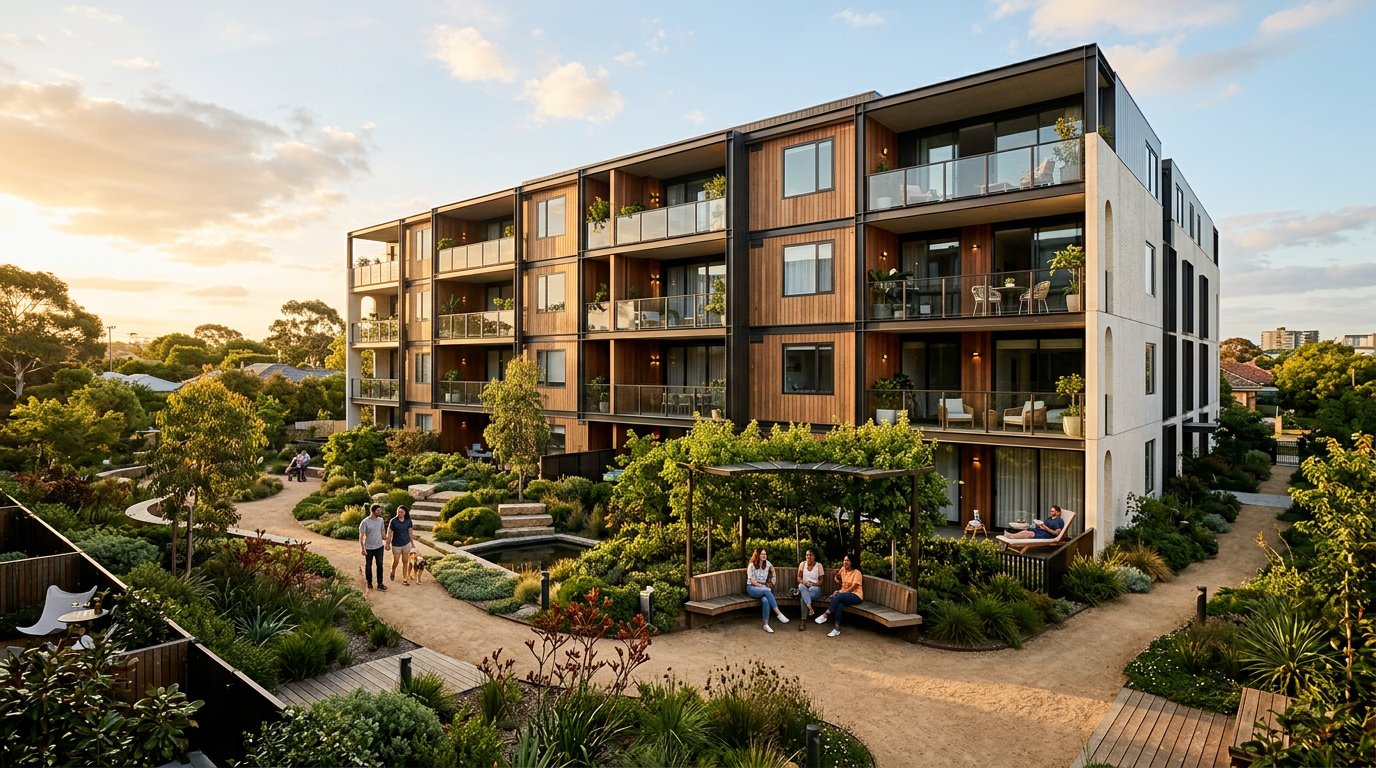
Picture this: It’s a Tuesday evening in suburban Sydney, and Sarah walks into her apartment building’s annual general meeting. She’s been living in her two-bedroom unit for three years, and tonight, she’s about to discover that her strata fees are jumping by 35%. The reason? A combination of skyrocketing insurance premiums, emergency building repairs that can’t wait, and new compliance requirements that nobody saw coming. Sarah’s story isn’t unique—it’s becoming the reality for thousands of NSW strata property owners as we head into 2026.
The Biggest Strata Issues For NSW In 2026 are creating unprecedented challenges for apartment owners, townhouse communities, and strata managers across the state. From insurance crises to building defects, from sustainability mandates to governance nightmares, the strata landscape is shifting beneath our feet. Understanding these challenges isn’t just helpful—it’s essential for protecting your investment and maintaining your quality of life.
Key Takeaways
- Insurance premiums are expected to continue their dramatic rise, with some schemes seeing increases of 30-50% due to natural disaster risks and building defect claims
- Building defects and cladding issues remain critical concerns, with thousands of buildings still requiring remediation work and owners facing massive special levies
- Sustainability compliance requirements are tightening, forcing strata schemes to invest in energy-efficient upgrades and meet new environmental standards
- Governance and communication challenges are intensifying as committees struggle with complex regulations, member disputes, and transparency demands
- Technology adoption gaps are leaving many schemes behind, missing opportunities for cost savings and improved management efficiency
Understanding the NSW Strata Landscape in 2026

Before diving into the specific challenges, it’s worth understanding what makes NSW strata living unique. With over 1.2 million people living in strata schemes across the state, NSW has one of the highest concentrations of strata properties in Australia. These range from small boutique complexes with just a handful of units to massive residential towers housing hundreds of families.
The Strata Schemes Management Act 2015 governs how these communities operate, but the practical reality of managing shared property goes far beyond legislation. It involves balancing diverse owner interests, maintaining aging infrastructure, and navigating an increasingly complex regulatory environment.
As we move through 2025 and look toward 2026, the pressure points in this system are becoming more apparent—and more expensive to address.
The Insurance Crisis: A Perfect Storm 🌪️
Why Insurance Premiums Are Skyrocketing
The single biggest financial shock hitting NSW strata schemes is the explosion in insurance costs. This isn’t a minor adjustment—many schemes are experiencing premium increases that would have seemed unimaginable just five years ago.
Multiple factors are driving this crisis:
- Climate change impacts: Increased frequency and severity of storms, flooding, and hailstorms across NSW
- Building defect claims: A surge in claims related to construction defects, particularly in buildings constructed during the 2000s and 2010s
- Cladding and fire safety concerns: Ongoing remediation costs and liability issues stemming from combustible cladding
- Reinsurance market pressures: Global insurance companies pulling back from high-risk markets, reducing competition
- Increased replacement costs: Rising construction costs mean higher sum insured values
One strata manager in Parramatta shared that a 50-unit complex she manages saw their annual insurance premium jump from $28,000 in 2023 to $47,000 in 2025—a 68% increase in just two years. For owners already dealing with rising strata fees, this creates genuine financial hardship.
What This Means for Owners
The insurance crisis isn’t just about higher quarterly fees. It’s forcing difficult decisions:
- Higher excess amounts: Many schemes are accepting higher policy excesses to reduce premiums, meaning owners pay more out-of-pocket when claims occur
- Reduced coverage: Some schemes are dropping optional coverages or accepting lower coverage limits
- Special levies: Emergency special levies to cover insurance shortfalls are becoming common
- Market value impacts: Properties in schemes with insurance problems may become harder to sell
“We had owners crying at our AGM when we announced the insurance increase. These aren’t wealthy investors—they’re retirees and young families who budgeted carefully. Now they’re facing an extra $1,200 per year they didn’t plan for.” — Strata Committee Secretary, Inner West Sydney
Building Defects and Cladding: The Never-Ending Nightmare
The Scale of the Problem
The Biggest Strata Issues For NSW In 2026 must include the ongoing building defect crisis. Thousands of apartment buildings across NSW were constructed with significant defects, from waterproofing failures to structural issues to dangerous cladding materials.
The NSW Government’s cladding remediation program has identified over 450 high-risk buildings requiring urgent work. But this is just the tip of the iceberg. Many more buildings have medium or low-risk cladding, and countless others have defects unrelated to fire safety.
Common defect categories include:
| Defect Type | Typical Cost Range | Timeframe to Fix |
|---|---|---|
| Combustible cladding removal | $2M – $15M+ | 12-36 months |
| Waterproofing failures | $500K – $3M | 6-18 months |
| Structural concrete issues | $1M – $8M | 12-24 months |
| Balcony defects | $300K – $2M | 6-12 months |
| Fire safety non-compliance | $200K – $2M | 3-12 months |
The Financial and Emotional Toll
For owners in affected buildings, the impact is devastating. Special levies of $30,000, $50,000, or even $100,000+ per unit aren’t uncommon for major remediation work. Many owners simply don’t have access to this kind of money, leading to:
- Forced sales at reduced prices
- Loan defaults and financial stress
- Family breakdowns due to financial pressure
- Mental health impacts from ongoing uncertainty
Mark and Jennifer bought their apartment in a Mascot high-rise in 2019. Three years later, they discovered their building had combustible cladding and significant waterproofing issues. Their special levy? $67,000. “We’re trapped,” Mark explains. “We can’t sell because nobody wants to buy into this mess, but we can’t afford to stay either. It’s destroyed our plans to start a family.”
Legal Battles and Recovery Efforts
Many schemes are pursuing legal action against builders, developers, and certifiers to recover defect rectification costs. However, these battles are lengthy, expensive, and uncertain. Understanding your rights as a strata owner is crucial when facing these challenges.
The NSW Government’s Building Commissioner has increased oversight and introduced stronger protections for future buyers, but these don’t help owners already stuck in defective buildings.
Sustainability and Energy Efficiency Mandates 🌱
New Compliance Requirements
Environmental regulations are tightening, and strata schemes aren’t exempt. The Biggest Strata Issues For NSW In 2026 increasingly include sustainability compliance as governments push toward carbon reduction targets.
Key areas of focus include:
- Energy efficiency ratings: Pressure to improve building energy performance
- Solar panel installations: Growing demand from owners, but complex common property implications
- EV charging infrastructure: Requirements to accommodate electric vehicle charging
- Water conservation: Mandates for water-efficient fixtures and rainwater harvesting
- Waste management: Stricter recycling and waste reduction requirements
The Cost-Benefit Challenge
While sustainability upgrades can reduce long-term operating costs, the upfront investment is substantial. A medium-sized strata scheme might face costs of:
- Solar panel installation: $50,000 – $150,000
- LED lighting upgrades: $15,000 – $40,000
- EV charging stations: $30,000 – $100,000
- Water efficiency improvements: $20,000 – $60,000
- Waste management systems: $10,000 – $30,000
Getting owner approval for these expenditures is challenging, especially when many are already stretched by insurance and defect costs. However, schemes that invest wisely can see significant long-term savings and improved property values.
Governance and Committee Dysfunction
The Challenge of Volunteer Leadership
Strata committees are typically composed of volunteer owners who must navigate complex legal requirements, financial management, and interpersonal conflicts—often with little training or support. This creates one of the most persistent of the Biggest Strata Issues For NSW In 2026: governance failures.
Common governance problems include:
- Lack of engagement: Difficulty finding owners willing to serve on committees
- Knowledge gaps: Committee members unfamiliar with their legal obligations
- Personality conflicts: Disputes between committee members paralyzing decision-making
- Transparency issues: Poor communication creating distrust among owners
- Compliance failures: Missing deadlines, improper record-keeping, and regulatory breaches
The consequences can be serious. Poorly governed schemes face higher costs, legal disputes, declining property values, and reduced quality of life for residents. Effective strata governance requires commitment, education, and often professional support.
The Strata Manager Relationship
The relationship between owners corporations and their strata managers is critical but often fraught with tension. Issues include:
- Cost vs. service balance: Pressure to keep management fees low while demanding more services
- Communication breakdowns: Slow responses, unclear information, and accessibility problems
- Scope of authority: Disputes over what managers can decide versus what requires committee approval
- Performance concerns: Inadequate maintenance oversight, poor contractor management, or financial irregularities
Knowing when to consider changing strata managers and how to manage that transition effectively is an important skill for committees facing persistent problems.
Technology Gaps and Digital Transformation
The Digital Divide
While many industries have embraced digital transformation, strata management in NSW often lags behind. This creates inefficiencies, higher costs, and communication problems—making it one of the emerging Biggest Strata Issues For NSW In 2026.
Areas where technology could help but often doesn’t:
- Digital communication platforms: Many schemes still rely on printed notices and postal mail
- Online document access: Owners struggling to access meeting minutes, financial reports, and by-laws
- Maintenance management systems: Lack of systematic tracking for repairs and maintenance history
- Financial transparency tools: Limited real-time access to financial information
- Voting and meeting participation: Difficulty enabling remote participation in meetings
The Benefits of Getting It Right
Schemes that successfully adopt appropriate technology see real benefits:
- Reduced administrative costs: Less printing, postage, and manual processing
- Improved communication: Faster, more reliable information flow
- Better decision-making: Access to historical data and trends
- Increased participation: Easier for owners to stay informed and engaged
- Enhanced transparency: Clear audit trails and accessible records
The challenge is choosing the right tools and ensuring adoption across diverse owner demographics, including those less comfortable with technology.
Dispute Resolution and Legal Conflicts ⚖️
The Rising Tide of Disputes
Strata living inherently involves compromise and shared decision-making, which creates fertile ground for conflicts. The pressures of rising costs, building defects, and lifestyle changes are intensifying these disputes.
Common dispute categories:
- Financial disputes: Arguments over levies, special assessments, and expenditure priorities
- By-law enforcement: Conflicts over pets, noise, parking, renovations, and property use
- Maintenance responsibilities: Disagreements about what’s common property versus lot owner responsibility
- Governance disputes: Challenges to committee decisions or election processes
- Neighbour conflicts: Personal disputes between residents that escalate
The NSW Civil and Administrative Tribunal (NCAT) handles thousands of strata disputes annually, but the formal legal process is time-consuming, stressful, and expensive. Effective dispute resolution often requires early intervention and professional mediation.
The Cost of Conflict
Beyond the financial cost of legal proceedings, disputes damage community cohesion, create toxic living environments, and reduce property values. One Inner West scheme spent over $80,000 in legal fees fighting a dispute about pet by-laws—money that could have funded essential maintenance or reduced levies.
Smart committees prioritize clear communication, consistent by-law enforcement, and early conflict resolution to prevent small disagreements from becoming expensive legal battles.
Short-Term Rental Challenges

The Airbnb Effect
Short-term rental platforms like Airbnb have transformed how some owners use their properties, but they’ve also created significant challenges for strata communities. While NSW introduced regulations in 2021, enforcement remains problematic.
Issues schemes face:
- Increased wear and tear: Higher turnover creating more maintenance needs
- Security concerns: Strangers with access codes compromising building security
- Noise and behaviour problems: Party guests disturbing permanent residents
- Insurance implications: Potential coverage issues with commercial use of residential properties
- By-law enforcement: Difficulty identifying and penalizing problematic short-term rental operators
Some schemes have successfully banned or restricted short-term rentals through by-laws, but this requires careful legal drafting and consistent enforcement. The changing regulatory landscape continues to evolve as governments balance tourism industry interests with resident amenity.
Aging Infrastructure and Capital Works Planning
The Maintenance Time Bomb
Many NSW strata buildings are now 20, 30, or even 40+ years old. Infrastructure that was adequate when built now needs major replacement or upgrade. This creates one of the most predictable but often ignored Biggest Strata Issues For NSW In 2026: inadequate capital works planning.
Major infrastructure items requiring replacement:
- Lifts: $150,000 – $400,000 per lift
- Roof replacement: $200,000 – $800,000+
- Plumbing systems: $300,000 – $1M+
- Electrical infrastructure: $200,000 – $600,000
- Parking structure repairs: $500,000 – $2M+
- Pool and recreation facilities: $100,000 – $500,000
The Capital Works Fund Crisis
NSW law requires schemes to maintain a capital works fund for major repairs and replacements. However, many schemes have systematically underfunded these reserves to keep levies artificially low. The result? Massive special levies when inevitable major works can’t be avoided.
A properly funded capital works fund should have:
- Professional building reports: 10-year capital works plans updated regularly
- Adequate contributions: Levies that reflect actual future needs, not wishful thinking
- Conservative assumptions: Planning for costs to exceed estimates
- Regular review: Annual assessment of fund adequacy and contribution rates
Schemes that have maintained adequate capital works funds navigate major projects with minimal stress. Those that haven’t face owner revolt, special levies, and sometimes deferred maintenance that creates safety hazards.
Practical Steps for Owners and Committees
What Individual Owners Can Do
If you’re a strata property owner concerned about these challenges, here are actionable steps:
✅ Stay informed:
- Attend AGMs and committee meetings
- Read all correspondence from your strata manager
- Understand your scheme’s financial position
- Review capital works fund reports
✅ Get involved:
- Consider joining your strata committee
- Volunteer for specific projects or working groups
- Communicate constructively with your committee
- Support reasonable proposals even if they increase costs
✅ Plan financially:
- Budget for levy increases of 5-10% annually
- Maintain an emergency fund for special levies
- Consider the long-term viability of your investment
- Factor strata issues into buying and selling decisions
✅ Seek professional advice:
- Consult strata consultants for complex issues
- Get independent legal advice when needed
- Understand your rights and obligations
- Don’t rely solely on internet forums for legal information
What Committees Should Prioritize
For those serving on strata committees, focus on these priorities:
🎯 Financial sustainability:
- Ensure adequate insurance coverage despite cost pressures
- Maintain properly funded capital works reserves
- Obtain multiple quotes for significant expenditure
- Implement transparent financial reporting
🎯 Proactive maintenance:
- Don’t defer essential maintenance to avoid levy increases
- Conduct regular building inspections
- Address small problems before they become expensive emergencies
- Maintain detailed maintenance records
🎯 Effective governance:
- Ensure all committee members understand their legal obligations
- Maintain clear, consistent communication with owners
- Document decisions properly
- Follow proper meeting and voting procedures
🎯 Professional support:
- Engage qualified strata managers and hold them accountable
- Use specialist consultants for complex issues
- Consider strata management training for committee members
- Build relationships with reliable contractors and service providers
Looking Ahead: Preparing for 2026 and Beyond
The Biggest Strata Issues For NSW In 2026 won’t disappear overnight. Many of these challenges will persist and potentially intensify. However, schemes that face reality, plan proactively, and invest appropriately will navigate these waters far more successfully than those that bury their heads in the sand.
Key trends to watch:
- Regulatory changes: Expect continued evolution in building standards, sustainability requirements, and governance rules
- Insurance market: Monitor whether government intervention or market forces stabilize premiums
- Technology adoption: Digital transformation will accelerate, creating advantages for early adopters
- Demographic shifts: Aging populations and changing work patterns affecting strata living preferences
- Climate adaptation: Increasing focus on resilience to extreme weather events
The schemes that thrive will be those that view these challenges as opportunities for improvement rather than just problems to endure. They’ll invest in their buildings, their governance systems, and their community relationships.
Conclusion: Taking Action on the Biggest Strata Issues
The challenges facing NSW strata schemes in 2026 are significant and multifaceted. From insurance crises to building defects, from sustainability mandates to governance struggles, the pressures are real and growing. However, understanding these issues is the first step toward addressing them effectively.
Your next steps:
- Assess your situation: Review your scheme’s financial health, building condition, and governance effectiveness
- Engage with your community: Attend meetings, ask questions, and contribute to solutions
- Plan for the future: Budget for increasing costs and potential special levies
- Seek expert help: Don’t hesitate to engage professional strata consultants when facing complex challenges
- Stay informed: Keep up with regulatory changes and industry developments
Whether you’re a first-time apartment buyer, a long-term owner, or a committee member trying to navigate these turbulent waters, remember that you’re not alone. Thousands of NSW strata schemes are facing similar challenges, and resources are available to help.
The Biggest Strata Issues For NSW In 2026 are daunting, but they’re not insurmountable. With proper planning, professional support, and community cooperation, your scheme can navigate these challenges and emerge stronger. The key is to start addressing these issues now, rather than waiting until they become crises.
For more information about managing your strata property effectively, explore additional resources on common strata issues and stay connected with industry developments. Your investment and your community are worth the effort.
References
[1] NSW Fair Trading – Strata Schemes Management Act 2015
[2] Insurance Council of Australia – Strata Insurance Market Report 2024
[3] NSW Building Commissioner – Cladding Remediation Program Data
[4] NSW Civil and Administrative Tribunal – Annual Strata Dispute Statistics
[5] Strata Community Association NSW – Industry Research Reports
[6] NSW Department of Planning and Environment – Sustainability Guidelines
[7] Australian Bureau of Statistics – Housing and Property Data