
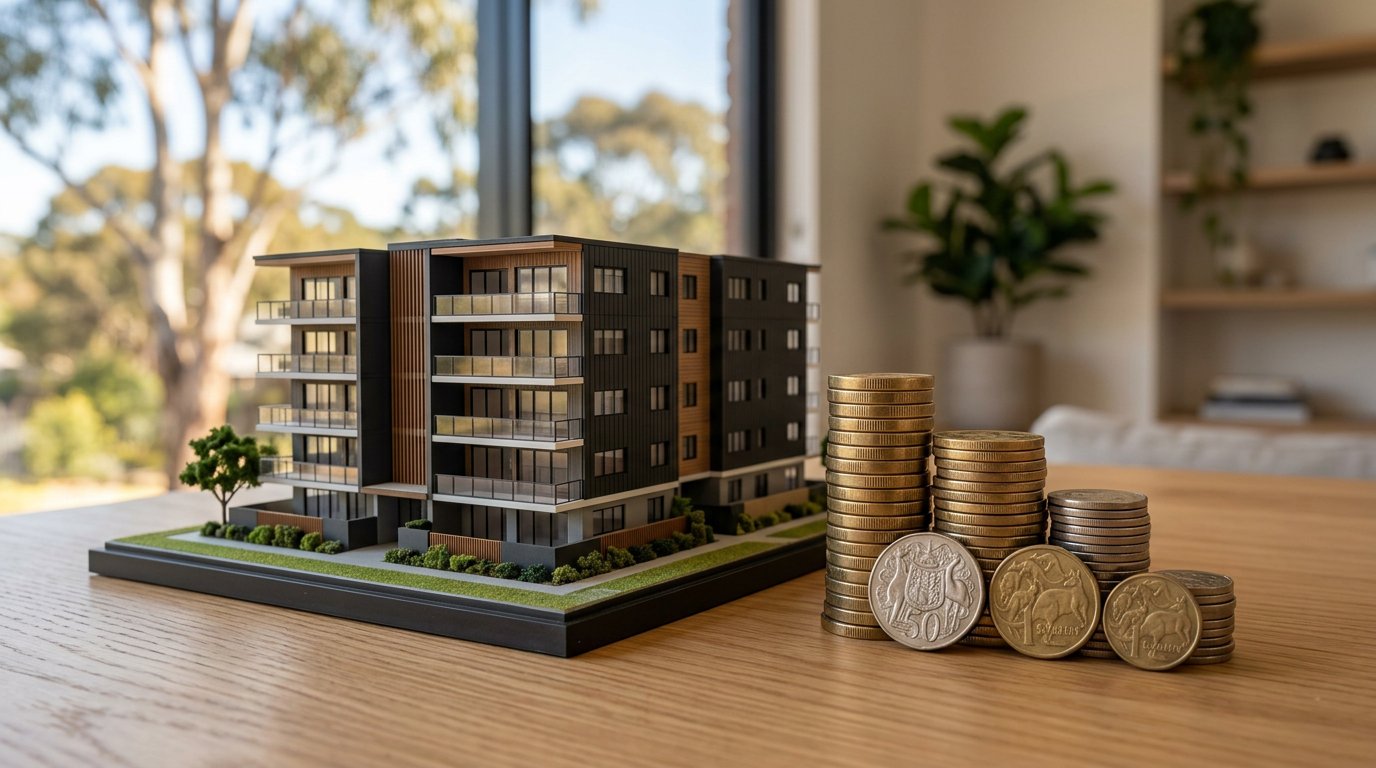
It is the first question every buyer asks — and the answer agents give is rarely complete. So, how much are strata fees? The honest answer: anywhere from about $400 per year for a small house-and-driveway scheme to well over $10,000 per year for a high-rise apartment with a pool, gym and concierge. This guide breaks down what strata fees actually pay for, typical ranges by building type across Australia, the red flags that signal a fee is about to rise, and how to work out what a specific building will really cost you.
For a quick estimate tailored to your property, try our free strata fees calculator — it models annual, quarterly and monthly levies based on building size, age, bedrooms and amenities.
What strata fees actually pay for
Strata fees (levies or contributions) fund three things:
- Administration fund: day-to-day running costs — insurance, managing agent fees, accounting, electricity for common areas, cleaning, gardening, small repairs
- Capital works (sinking) fund: long-term maintenance — painting, lift replacement, roof and gutter renewal, waterproofing, major plant upgrades
- Special levies: one-off charges when either fund falls short (see our guide to special levies explained)
The mix matters: a building that keeps the admin fund lean but underfunds capital works is not cheap — it is deferred maintenance with a bill attached.
Typical strata fee ranges by building type
Based on published market data and our analysis of Australian schemes, expect these annual per-lot ranges:
| Building type | Typical annual levies | What drives the cost |
|---|---|---|
| House + shared driveway (2-6 lots) | $400 – $1,200 | Insurance, minimal common property |
| Walk-up townhouses (6-20 lots) | $1,200 – $3,000 | Building insurance, gardens, small capital fund |
| Low-rise apartments (3 storeys, no lift) | $2,000 – $4,000 | Painting cycles, gutters, common area power |
| Mid-rise with lift (4-8 storeys) | $3,500 – $7,000 | Lift servicing, fire safety, gym or pool |
| High-rise with facilities (pool, gym, concierge) | $6,000 – $12,000+ | Amenities, staff, plant, higher insurance |
These figures assume the capital works fund is being funded responsibly. Buildings that have underfunded their capital fund often show deceptively low fees followed by large special levies.
What drives fees up (and down)
- Amenities: a pool can add $1,500-$3,000 per lot per year; a gym and concierge add more
- Building age: buildings 15-30 years old face paint, plant and waterproofing cycles; brand-new buildings often have artificially low fees for the first year or two before real costs arrive
- Location risk: coastal and northern-Australia buildings face much higher insurance premiums; see our guide to strata insurance costs
- Size of scheme: costs are shared across more lots in larger buildings, though amenities offset this
- Management quality: competitive manager contracts and responsible fund planning meaningfully reduce fees — see changing strata managers
- Defects history: buildings with unresolved defects can carry heavy rectification levies
State-by-state differences
The terminology and some rules differ, but the economics are similar nationally. Our state guides cover specifics: average strata fees in Sydney, strata fees in Perth, and body corporate fees in Melbourne and beyond.
How to estimate fees for a property you are buying
- Ask for the last two budgets and AGM minutes — they show exactly what the scheme spends and any planned increases
- Request the capital works fund balance and plan — a healthy fund has meaningful reserves and a 10-year plan
- Check for pending special levies or litigation — the information certificate must disclose these
- Compare per-bedroom costs against similar buildings nearby
- Run the numbers with our strata fees calculator to sanity-check the ranges
Frequently asked questions
Are strata fees monthly or quarterly?
Levies are struck annually at the AGM but usually paid quarterly (NSW, QLD, VIC commonly) or sometimes monthly by arrangement. Some schemes offer payment plans — see our guide to strata fee arrears.
Why are new-build strata fees so low?
Developer-set first-year budgets are often unrealistically low to make the property look cheaper. Fees typically rise 20-40% in years 2-3 as real costs (insurance renewals, defects, actual maintenance) replace developer estimates. Always model year-3 costs, not year-1.
Do strata fees include council rates and utilities?
No. Strata fees cover common property administration and capital works only. You separately pay council rates, water usage for your lot, electricity and gas for your lot, and contents insurance. See our explainer on whether strata fees include council rates.
Can strata fees increase without notice?
No — fee changes must be approved at a general meeting included in the agenda, giving owners advance notice. But they typically DO increase each year with inflation and insurance costs; a scheme that never raises fees is usually underfunding maintenance.
Related guides: are strata fees worth it?, strata budgeting tips, what are strata fees.